Implementing openEHR in practice: What does vendor-independent healthcare data actually look like?
openEHR provides a vendor-independent method for recording and sharing clinical data. Here's how that works in practice — using Advance Care Planning as an example.
By Jim Klein, Interoplab
Healthcare professionals need to be able to access and share patient data — regardless of which institution recorded it. openEHR provides a vendor-independent method: an international standard for recording and exchanging clinical data via standardized archetypes.
How openEHR works
openEHR uses a two-layer model:
Reference Model (RM) — the stable technical foundation. The RM manages versioning, audit trails, data types, and the Archetype Query Language (AQL). This layer is stable and rarely changes.
Archetypes and templates — the clinical layer. Archetypes describe how data like diagnoses, allergies, and vital signs are structured. Templates combine archetypes into usable clinical documents for specific use cases.
Advance Care Planning as a practical example
We modeled the Advance Care Planning (ACP) use case in openEHR. ACP concerns agreements between patients and healthcare providers about future care and treatment limitations — information that must be accessible across institutional boundaries.
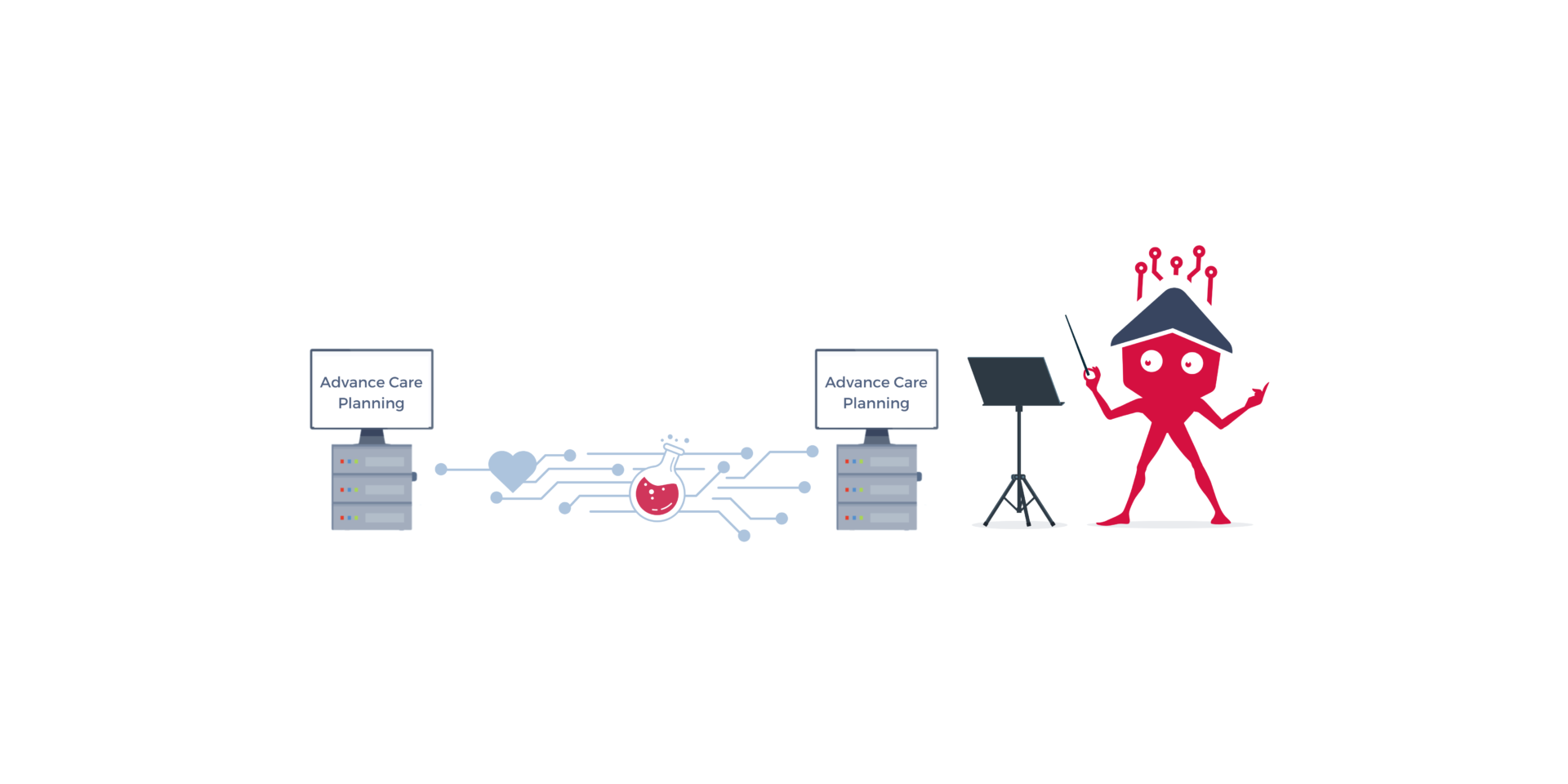
Mapping international archetypes to Dutch Healthcare Information Building Blocks (ZIBs) proved straightforward. We successfully loaded the resulting template in two different Clinical Data Repositories: EHRbase and Better. Both systems could read and process the template — without any template modifications.
Four key takeaways from practice
- Control over your data model — you’re not locked into a specific vendor’s structure
- Standardized, structured data entry — consistent registration makes data reusable
- Context-aware data interpretation — archetypes carry the meaning of data with them
- Adaptation to local requirements — national specifications (ZIBs) can map to international archetypes without breaking the structure
What this means
openEHR doesn’t solve the interoperability problem alone. But it provides a solid foundation for healthcare organizations that want to invest in structural, reusable data registration — without being locked in to a single vendor.
Interested in how openEHR fits your organization? Get in touch →